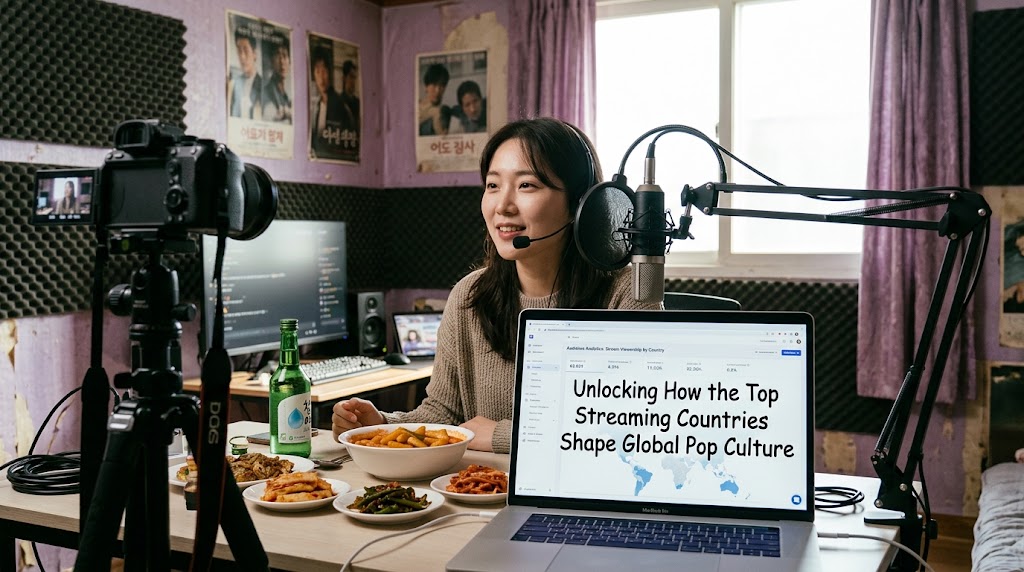
A silly dance filmed in a tiny Asian apartment can go from nobody’s business to everyone’s business in 24 hours. That’s the strange power of the top streaming countries. The countries with the strongest streaming ecosystems don’t merely consume internet culture. They export formats, creators, shopping habits, slang, food trends, music and even new ways of interacting with brands.
But there’s a catch. There isn’t one official global ranking of “top streaming countries” because the answer changes depending on whether we measure livestream viewers, creator output, social video, gaming or live commerce. What matters more is cultural influence: which markets repeatedly create formats that audiences elsewhere copy.

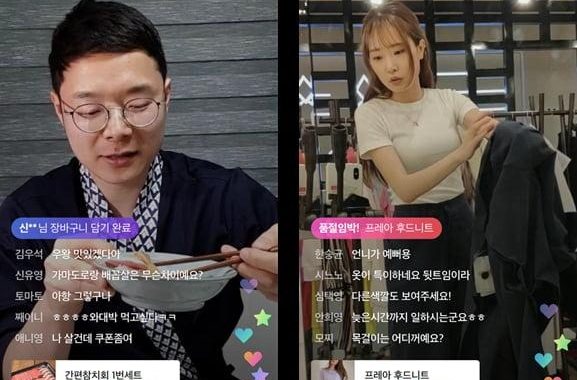
South Korea is an obvious example. Mukbang developed from Korean online broadcasting and eventually became a global format, while K-pop turned livestreaming and fan participation into part of the modern entertainment machine. Research describes mukbang as having evolved from a Korean internet format into a global cultural phenomenon.
1. Why the Top Streaming Countries Become Digital Culture Exporters
South Korea Turned Mukbang Into a Global Language
Mukbang is perhaps the cleanest example of cultural export through livestreaming.
The format began in South Korea and combined food, personality, real-time interaction and eventually ASMR. It wasn’t simply about watching someone eat. The social element mattered. Viewers could effectively share a meal with someone despite being physically alone.
That emotional hook made the format portable.
Creators in the United States, Japan, Indonesia and other countries adopted their own versions, proving that a cultural format doesn’t need to remain tied to its original language.
K-Pop Made Fan Participation Part of the Product
K-pop pushed another model forward.
Fans don’t just listen to songs. They watch livestreams, comment in real time, participate in digital communities and coordinate streaming activity. Historical examples of K-pop livestream platforms show how enormous fan participation could become, with individual broadcasts attracting millions of viewers and interactions.
The lesson for creators is simple: culture spreads faster when audiences are given something to participate in, not merely something to watch.
China Turned Livestreaming Into a Shopping Machine
China’s influence looks different.
Instead of focusing primarily on entertainment, Chinese platforms developed livestreaming into a serious retail channel. By 2025, China’s live-commerce GMV was estimated at more than ¥5 trillion, representing close to one-third of online retail, according to China’s 2025 livestream commerce white paper.
That scale explains why live commerce trends originating in China increasingly influence retailers elsewhere.
The United States Still Sets the Platform Playbook
The US remains hugely influential through platforms, creator businesses, entertainment franchises and advertising models.
Its biggest export isn’t necessarily one specific livestream format. It’s the infrastructure around creators: subscriptions, sponsorships, memberships, influencer marketing and platform-driven discovery.
That makes the US particularly important to the business side of global streaming.
2. How Live Commerce Trends Turn Viewers Into Global Consumers
The most interesting shift is happening when entertainment and shopping stop being separate activities.

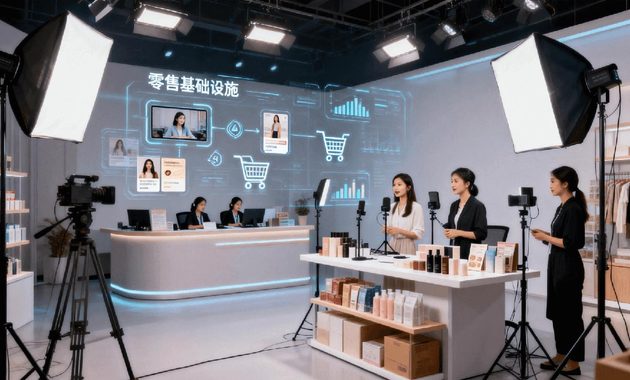
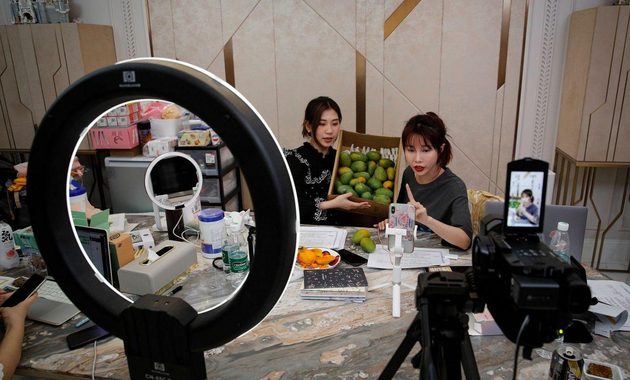
China’s Livestream Shopping Model
A Chinese livestream shopping session can look chaotic to an outsider: products appear, hosts demonstrate them, prices change, viewers comment and limited-time offers create urgency.
Yet underneath the noise is a sophisticated conversion model.
Recent NIQ research estimates China’s live-commerce market reached roughly US$900 billion in 2025, while Asia Pacific accounted for about 55% of global e-commerce revenue.
That’s not a niche experiment anymore.
Why Demonstration Beats Traditional Advertising
Live selling gives consumers something conventional advertising struggles to provide: immediate demonstration.
A host can show how a product works, answer questions and react to objections while the viewer is still deciding.
Research published in 2026 also found that livestreaming can create cross-channel sales spillovers and strengthen brand equity rather than simply moving sales from one channel to another.
Micro Culture Can Become a Shopping Funnel
This is where internet culture becomes commercially powerful.
A food trend can introduce a restaurant. A beauty livestream can introduce a Korean skincare brand. A creator demonstrating stationery can turn an obscure product into a global curiosity.
The audience doesn’t necessarily think, “I’m consuming a cultural export.”
They’re simply watching something interesting.
Then comes the click.
Why Other Countries Keep Copying the Format
The appeal is obvious:
- real-time interaction
- visible product demonstrations
- social proof from comments
- scarcity and limited offers
- creator credibility
- immediate purchase opportunities
China’s model is particularly influential because it combines entertainment, community and commerce in one screen.
3. What Cultural Export Means for Creators Outside These Markets
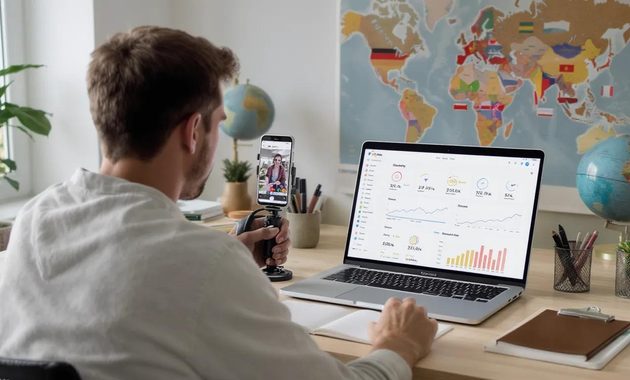
The biggest mistake is copying another country’s content word for word.
Instead, copy the mechanism.
A creator in Indonesia, Brazil or the UK doesn’t need to become Korean or Chinese to benefit from these models. They can borrow the underlying structure and adapt it locally.
For example:
- Borrow the community model.
Build recurring interaction rather than treating viewers as anonymous traffic. - Borrow the demonstration model.
Show products, skills or processes instead of simply talking about them. - Borrow the cultural storytelling.
Local food, humor, fashion and traditions can become internationally interesting when presented clearly. - Borrow the participation loop.
Polls, comments, challenges and viewer requests turn passive audiences into contributors.
The cultural export effect becomes especially powerful when a local creator has something genuinely specific to offer.
A Korean creator doesn’t need to make Korean culture “global” deliberately. Mukbang spread because the format was distinctive enough to travel. Research on Korean culinary media now links exposure to Korean food content with cultural curiosity and even tourism intentions.
That’s the real opportunity.
Don’t chase whatever is already viral everywhere. Find the thing your market understands unusually well, package it for a wider audience and let viewers carry it across borders.
If you’re planning to broadcast while traveling or targeting audiences outside your home market, this guide on whether you can go live in another country is a useful practical next step.
The internet culture created in one country can become somebody else’s business opportunity thousands of miles away.
Q&A
Which country has the strongest influence on livestream commerce?
China is arguably the most important market to study because livestream commerce has reached enormous scale there, with 2025 estimates putting the market at around US$900 billion.
Why did mukbang spread outside South Korea?
It combined food, personality, visual spectacle and social connection. Those ingredients are easy to understand even when viewers don’t speak Korean. Academic research confirms that the format developed from Korean online broadcasting into a global phenomenon.
Can a small creator benefit from these global trends?
Yes. The smarter approach isn’t copying a foreign creator. Study the format, identify what makes it addictive or commercially useful, then rebuild the idea around your own culture, audience and expertise.

Amara Nwosu is a digital culture writer who has covered online media communities in Africa, Europe, and parts of Asia. She previously worked on international communications projects involving live conferences, cultural broadcasts, and multilingual digital campaigns. Her articles examine how internet access, local platforms, language, and cultural habits shape the way people create and watch livestreams around the world.